 how-to
Who Holds the Deed in Owner Financing
Table of Contents
- Who Holds the Deed in Owner Financing
- How Owner Financing Works and Deed Ownership
- Land Contract vs Owner Financing: Deed Ownership Differences
- The Role of the Owner Financing Contract
- Owner Financing Deed of Trust and Security Interests
- Down Payment Requirements and Deed Transfer
- Protecting Your Ownership: Verification and Recording
- What Happens to the Deed After Payoff or Default
- Frequently Asked Questions
Last Updated: October 12, 2026
Who Holds the Deed in Owner Financing
Who holds the deed in owner financing? In most owner financing arrangements, the buyer receives the deed and becomes the legal owner at closing, just as they would in a traditional mortgage. However, the seller typically retains a security interest through a promissory note, deed of trust, or mortgage until the buyer completes all payments. This structure protects both parties: the buyer gains ownership rights immediately, while the seller has legal recourse if payments stop.
Understanding deed ownership is critical because it determines who can sell the property, refinance it, or claim it as collateral. At Sold With Financing, we ensure buyers become the owner of record on day one, with the deed in their name at closing. This transparency removes the uncertainty many face when exploring alternative financing paths.
The distinction between holding the deed and holding a security interest often confuses buyers and sellers alike. The deed represents legal ownership. The security interest represents the seller's right to foreclose if payments fail. Both can exist simultaneously, and understanding how they work together protects your investment.
How Owner Financing Works and Deed Ownership
Owner financing bypasses traditional banks. Instead, the property seller acts as the lender. The buyer and seller negotiate terms directly, including the down payment, interest rate, and repayment schedule. Once they agree, they execute legal documents that formalize the arrangement.
Here's the typical flow:
- Buyer and seller negotiate purchase price and financing terms
- Buyer provides a down payment directly to the seller
- Both parties sign a purchase agreement and promissory note
- Seller files a security interest (deed of trust or mortgage) to protect their investment
- Deed transfers to buyer's name at closing
- Buyer makes monthly payments to the seller until the loan is paid off
The buyer owns the property from day one. They can live in it, maintain it, and claim it as their residence for tax purposes. They cannot, however, sell or refinance without the seller's permission or payoff, because the seller's security interest encumbers the title.
This arrangement works well for buyers who struggle with traditional lending. Self-employed individuals, ITIN holders, and those with credit challenges often qualify when banks reject them. Sold With Financing focuses on your income and down payment, not credit scores, making homeownership accessible for those in complicated situations.
The seller benefits too. They retain a steady income stream through monthly payments and maintain security through the recorded lien. If the buyer defaults, the seller can foreclose and reclaim the property.
Land Contract vs Owner Financing: Deed Ownership Differences
A land contract and owner financing sound similar but differ significantly in who holds the deed. Understanding these differences protects your rights.
In a land contract, also called an installment land contract or contract for deed, the seller retains legal title to the property until the buyer completes all payments.
This structure creates risk for the buyer. If the seller faces financial trouble or a lawsuit, creditors could attach the property. If the seller dies, the buyer's rights may become complicated.
In owner financing with a deed of trust or mortgage, the buyer receives the deed immediately. Legal title transfers at closing.
The key difference: land contracts keep the deed with the seller. Owner financing transfers the deed to the buyer while the seller holds a security interest.
For buyers seeking stability and true ownership, owner financing with immediate deed transfer is preferable. Sold With Financing structures deals this way, you own the property from day one, not years down the line.
Some states restrict or disfavor land contracts due to the risks they pose to buyers. A few jurisdictions require specific disclosures or cooling-off periods.
The Role of the Owner Financing Contract
The owner financing contract is the foundation of the entire transaction. It spells out every obligation, right, and remedy available to both parties. Never skip this document or treat it casually.
The contract typically includes:
- Purchase price and down payment amount
- Interest rate and monthly payment amount
- Repayment term (number of years to pay off)
- Late payment penalties or grace periods
- Default provisions and remedies
- Property description and address
- Buyer and seller names and contact details
- Closing date and conditions
The promissory note accompanies the contract. This document is the buyer's written promise to repay the seller. It specifies the exact payment schedule and what happens if payments are missed.
A deed of trust or mortgage document creates the seller's security interest. This legal instrument gives the seller the right to foreclose if the buyer stops paying.
These three documents work together. The contract sets the deal. The promissory note formalizes the debt. The deed of trust or mortgage secures the seller's position.
Ambiguity in these documents causes disputes. A buyer might claim the seller agreed to forgive a late payment. The seller might dispute that claim. The contract prevents these arguments by stating exactly what's required and what happens when terms are broken.
Before signing, review every clause. Understand your obligations and the seller's rights if you default. If terms are unclear, ask for clarification in writing.
Owner Financing Deed of Trust and Security Interests
A deed of trust is a legal document that creates a security interest in the property.
In a deed of trust, three parties are involved:
- The buyer (called the trustor)
- The seller (called the beneficiary)
- A neutral third party called the trustee
When the buyer defaults, the trustee can foreclose on the property and sell it to recover what the seller is owed.
A mortgage involves only two parties: the buyer and the seller. If the buyer defaults, the seller must go through the court system to foreclose.
Both instruments accomplish the same goal: they give the seller a legal claim against the property if payments stop. The choice between them depends on state law and the parties' preferences.
The security interest must be recorded in the county recorder's office where the property is located. Recording creates a public notice that the seller has a claim.
This is why the buyer cannot simply walk away. The seller's security interest follows the property. Any future buyer or lender will see the lien and refuse to proceed without it being satisfied.
State laws vary on foreclosure procedures and timelines. Some states allow non-judicial foreclosure (the trustee sells the property without court involvement). Others require judicial foreclosure (the seller must sue in court).
Down Payment Requirements and Deed Transfer
The down payment is your initial investment in the property. It's the amount you pay upfront before owner financing begins.
A larger down payment benefits both parties. The buyer demonstrates commitment and reduces the seller's risk. The seller feels more secure and may offer better terms, like a lower interest rate or longer repayment period.
Here's how the down payment and deed transfer connect:
- Buyer and seller agree on purchase price and down payment
- Buyer provides down payment (usually held in escrow until closing)
- At closing, deed transfers to buyer's name
- Seller records the deed of trust or mortgage
- Buyer begins making monthly payments
The deed transfer happens at closing, not after the down payment is made. This timing is crucial. It means the buyer owns the property from day one, even though the seller holds a security interest.
Some buyers worry: if the seller holds a security interest, do I really own the property? The answer is yes. You hold legal title.
Down payment size affects your monthly payment. A larger down payment means you're financing less, so your monthly payment is lower. A smaller down payment means higher monthly payments but less cash needed upfront.
Sold With Financing works with you to find a down payment amount that fits your situation. We focus on what you can realistically afford, not arbitrary credit score thresholds that traditional lenders impose.
Protecting Your Ownership: Verification and Recording
Once the deed transfers to your name at closing, verify that the transfer was recorded correctly. Recording creates an official public record of your ownership. Without proper recording, your ownership could be challenged.
Here's how to verify your deed ownership:
- Visit or contact your county recorder's office
- Request a copy of the recorded deed in your name
- Review it for accuracy: your name, the property address, the seller's name, and the recording date
- Check that the deed of trust or mortgage was also recorded
- Request a title search to confirm no other liens exist
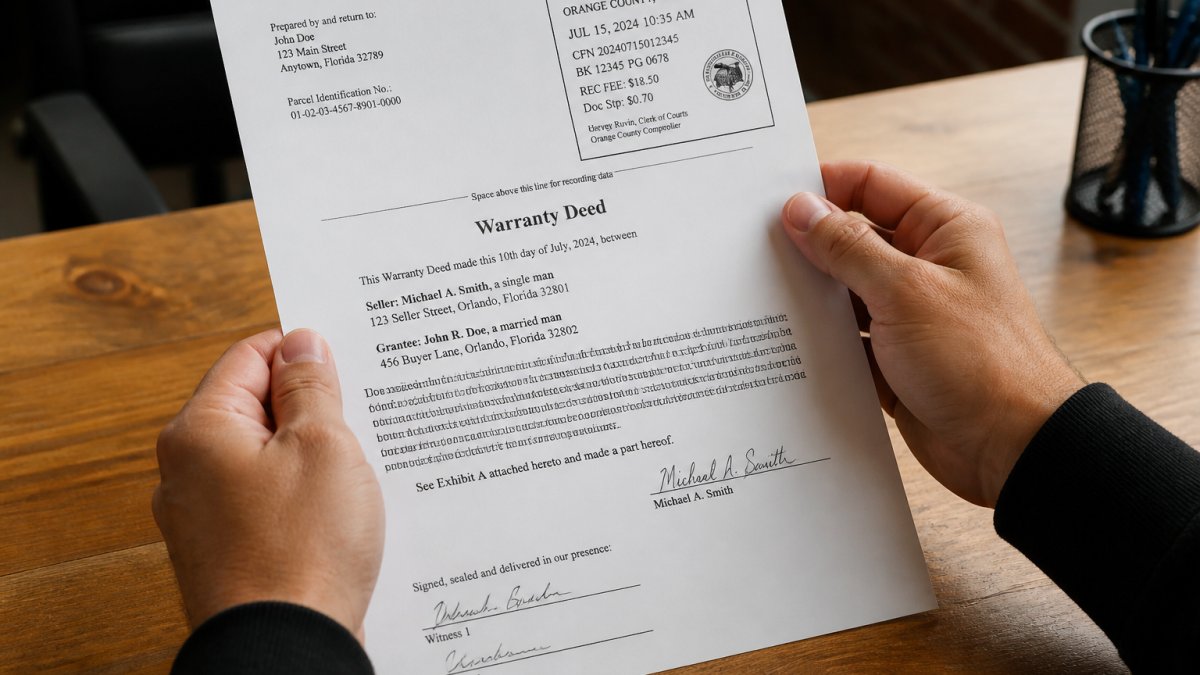
The county recorder maintains these records publicly. You can usually access them online through the county assessor's website or visit in person. Many counties charge a small fee for copies.
A title search reveals all liens, mortgages, and claims against the property. It's worth paying for one before closing to ensure the seller has a clear right to sell.
Recording protects you in several ways. It establishes your ownership date. It prevents the seller from selling the property to someone else. It puts future lenders on notice that the property is encumbered.
Never skip the recording step. Unrecorded deeds can lead to disputes, lost ownership claims, and legal nightmares.
What Happens to the Deed After Payoff or Default
When you finish paying off the owner financing loan, the seller must release their security interest. This process clears the lien and gives you a completely unencumbered deed.
The seller typically executes a deed of release or satisfaction of deed of trust. This document formally removes the seller's claim against the property. It must be recorded in the same county where the original deed of trust was recorded.
After recording the release, you own the property free and clear. You can sell it, refinance it, or do anything else without the seller's involvement.
If you default, meaning you stop making payments, the seller can foreclose. Foreclosure laws vary by state, but the general process is:
- Seller sends a notice of default
- Buyer has a grace period (usually 30-60 days) to catch up
- If payment isn't made, seller initiates foreclosure
- Property is sold (either through court or non-judicial process)
- Proceeds from the sale pay off the remaining loan balance
- If sale proceeds exceed the balance, buyer may receive the difference (called equity)
Foreclosure is expensive and time-consuming for the seller. Most sellers prefer to work with buyers on payment difficulties rather than foreclose. If you're struggling, communicate with your seller immediately. Many arrangements can be modified.
Sold With Financing provides fixed monthly payments with no balloon payments or prepayment penalties. This means you can refinance or pay off early without surprise fees.
Frequently Asked Questions
Who holds the deed in owner financing?
In owner financing, the buyer receives the deed and becomes the owner of record at closing. The seller retains a security interest (typically through a deed of trust or mortgage) to protect their investment until the buyer completes repayment. This structure means you own the property from day one, but the seller has legal recourse if you default on the loan.
What is the difference between a land contract and owner financing?
In a land contract, the seller retains legal title until the buyer completes all payments, while the buyer holds equitable title. In owner financing, the buyer receives the deed immediately and holds legal title, with the seller holding only a security interest. Owner financing offers buyers stronger ownership protections and clearer legal standing from the start of the transaction.
What is a typical down payment for owner financing?
Down payments for owner financing vary based on the seller's requirements and the buyer's financial situation. Many owner-financed deals require 10-20% down, though some sellers accept less. The down payment amount affects the loan balance, monthly payment, and the seller's confidence in the buyer's ability to complete repayment. Your specific down payment depends on negotiation with the seller and the property value.
What happens to the deed when an owner-financed loan is paid off?
Once you complete all payments on an owner-financed loan, the seller releases their security interest by signing a deed of release or satisfaction document. This document is recorded in public records to clear the lien from your property. You then hold the deed free and clear with no encumbrances, giving you full ownership without any seller claims or security interests remaining.
Owner financing puts you in control of your homeownership journey. When you understand who holds the deed and how the documents work, you can make informed decisions and protect your investment. The deed in your name at closing is the foundation of true ownership. At Sold With Financing, we make sure that foundation is solid. See if you qualify today.